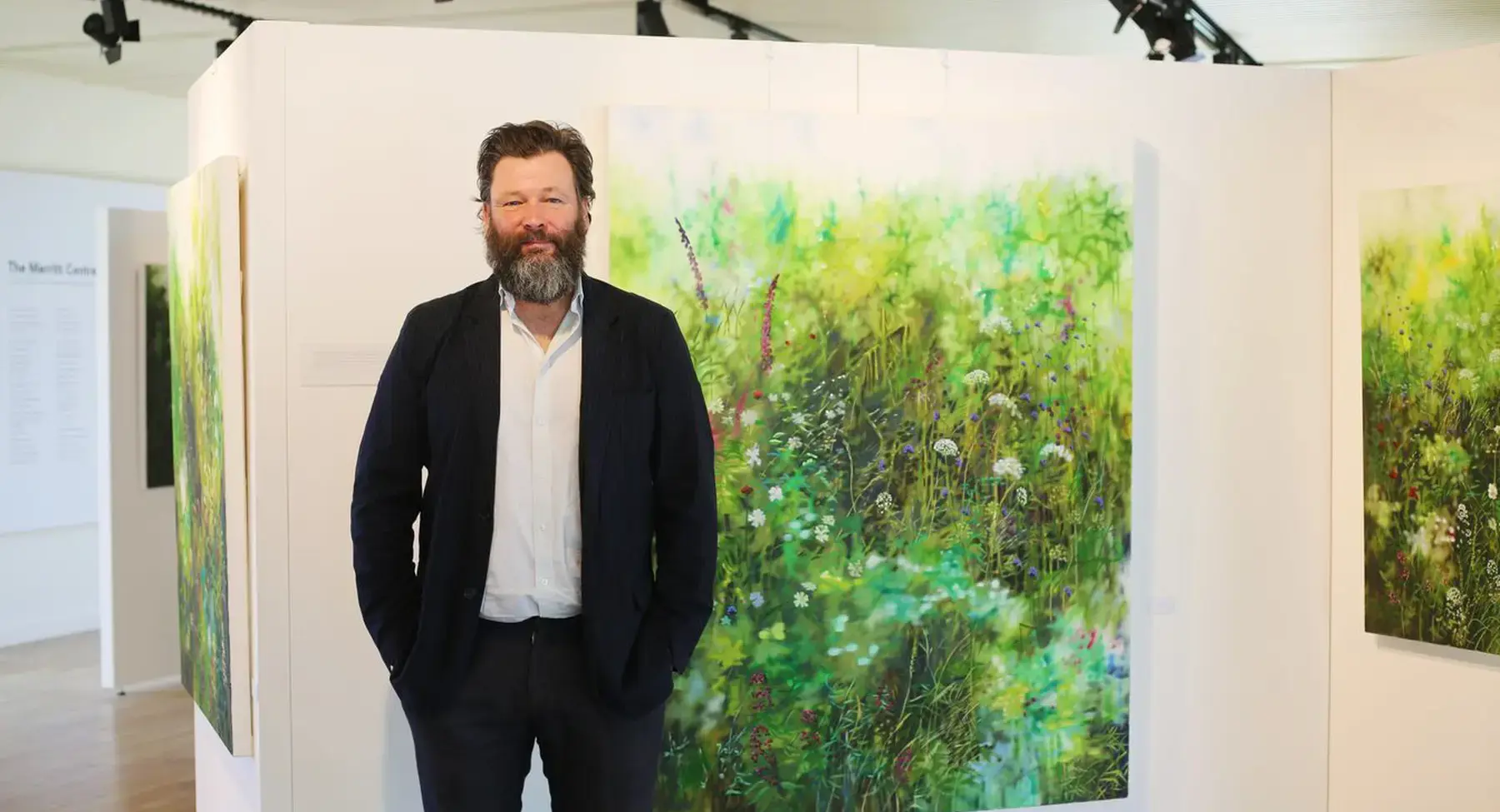
Cape Farewell - a partnership with Sherborne Girls
By Dylan Lloyd, Head of Art, Design & Technology
In Dylan Lloyd's article for Sherborne Times he sets out the reasons why he embarked on Sherborne Girls' wide ranging partnership and year-long project with Cape Farewell, a leading leading international charity that brings together artists and scientists to address climate change with its HQ in Dorset. Dylan writes,"As I took stock after my first year as Head of Art at Sherborne Girls, an idea formed of Sherborne Girls working in partnership with the charity on a prolonged project which would not only reinforce the way I feel Art should be taught, but would bring huge opportunities for pupils and local residents alike by bringing world-leading experts in their field to our collective doors."
Climate is Culture
Living in the Dorset countryside, I have had several days this winter when the best laid plans have had to be rearranged because of storms and flooding. We all know about climate change, the news is full of stories of one ‘named’ storm or another, but when it starts to affect our daily lives, the realities really hit home. Cape Farewell is a leading international charity that brings together artists and scientists to address climate change and an organisation I have long admired, bringing together as it does two of my passions. A couple of years ago I joined Sherborne Girls, to become Head of Art after many years living and working in Dorset. My daughter, Lily, was already working for Cape Farewell which had recently relocated from London to Sydling St Nicholas. As I took stock after my first year in post, an idea formed of Sherborne Girls working in partnership with the charity on a prolonged project which would not only reinforce the way I feel Art should be taught, but would bring huge opportunities for pupils and local residents alike by bringing world-leading experts in their field to our collective doors.
So it was that the Sherborne Girls/Cape Farewell partnership was formed and launched last September. I have to admit that working with my daughter has made the whole project even more meaningful and impactful for me. She has lived in Dorset for most of her life and we both feel such a strong connection to the area. So, the project is both personal and universal, much like art has to be, in order to have any real impact.
Perhaps it would help if I set out my philosophy about teaching art. I don’t believe that being good at art makes you an artist. An artist uses art to express and speak about something they feel strongly about, inspired by the world around them. This can be challenging for pupils to understand at first, but by the time they are in senior school it can be really exciting and motivating for young artists to be given the freedom and opportunity to express themselves through art.
The Cape Farewell partnership runs until Easter. Entrepreneurs, artists, scientists and film makers have acted as catalysts for a whole series of projects across different departments, with a particular focus on Art and Science. For many of our pupils, climate change, environmental issues, and sustainability are deeply important. This project has given them new ways to express their ideas and contribute to solutions, including visual arts, science, music, creative writing, and essays. Working across more than one discipline, pupils have ensured their responses are both scientifically informed and visually compelling.
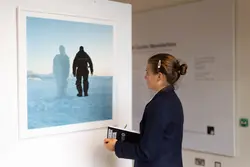
I hope some of you will have seen Cape Farewell’s exhibition in Sherborne Girls’ Wirth Gallery at the start of our partnership. Texts were displayed alongside photographs, drawings, sculptures, and film footage from their expeditions, including contributions by prominent figures such as Ian McEwan and Antony Gormley. David Buckland, Cape Farewell’s Founder, delivered a keynote lecture highlighting how creatives and scientists can collaborate to address climate change and amplify their message through partnership.
A few months later, we held another exhibition to showcase pupils’ responses. Visitors could read essays on reducing our carbon footprint, explore fully illustrated children’s books, and experience atmospheric soundscapes created by our musicians. Visual artists presented installations, drawings, paintings, sculptures, and photographs that encouraged viewers to reconsider their environmental impact. Junior pupils also used Minecraft to reimagine London, demonstrating how urban spaces could be rewilded and carbon footprints reduced. The exhibition highlighted the diversity of responses and the unique voices each pupil brought to the project.
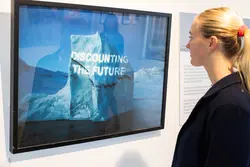
A lecture series has brought a formidable array of talented, internationally renowned voices to Sherborne. Juliet Davenport, founder of Green Energy, spoke about the science of green energy, current trends, and future possibilities. Michael Pinksy, leading artist and environmentalist, gave an extraordinary talk spanning his celebrated Pollution Pod sculpture and his ideas for resource use and recycling and Simon Boxall, oceanographer and Cape Farewell trustee will deliver the final lecture, drawing together all threads of our project. The sheer vitality of these talks and the wealth of innovative ideas were instrumental in inspiring pupils to develop their own responses and projects. Perhaps the thing I am most proud of is the ethos of collaboration which has influenced all corners of the school, from junior to senior pupils, and across the wider Sherborne Schools Group.
So, as we approach the last months of this amazing partnership I am delighted to see A-level biologists collaborating with fine artists and photographers, using the rivers and fields of Sydling St Nicholas as inspiration for experiments and visual responses. Junior artists are working with sculptor Fiona Campbell to create beautiful sculptures from discarded materials collected from across Dorset. Meanwhile, our academic scholars are exploring climate science in depth, examining both the challenges and the opportunities it presents. The musical soundscapes created by pupils in Music Technology were extremely powerful (please follow the QR code to listen for yourself) as were the images and ideas about how our cities could flourish and become so much cleaner by being open minded about planning and functionality.
In late January, I attended the launch of the film Our Life is Here screened at the National Maritime Museum in Greenwich. It follows Western and Marshallese artists on the 2023 Cape Farewell expeditions to the Marshall Islands. Later this year, it will be shown at Sherborne Girls in the Gransden Hall, alongside the final exhibition of pupil responses in the Wirth Gallery, marking the official conclusion of the partnership. I hope to see some of you there.
Where Next?