
Innovative Learning in Spanish: AI, Sustainability and Creative Thinking
At Sherborne Girls, innovation in learning is not driven by technology for its own sake, but by a clear educational purpose: to deepen understanding, sharpen thinking and prepare pupils to engage thoughtfully with a rapidly changing world. This term, Spanish lessons have provided a powerful example of how digital tools can be harnessed to enrich language learning while developing critical, creative and ethical awareness.
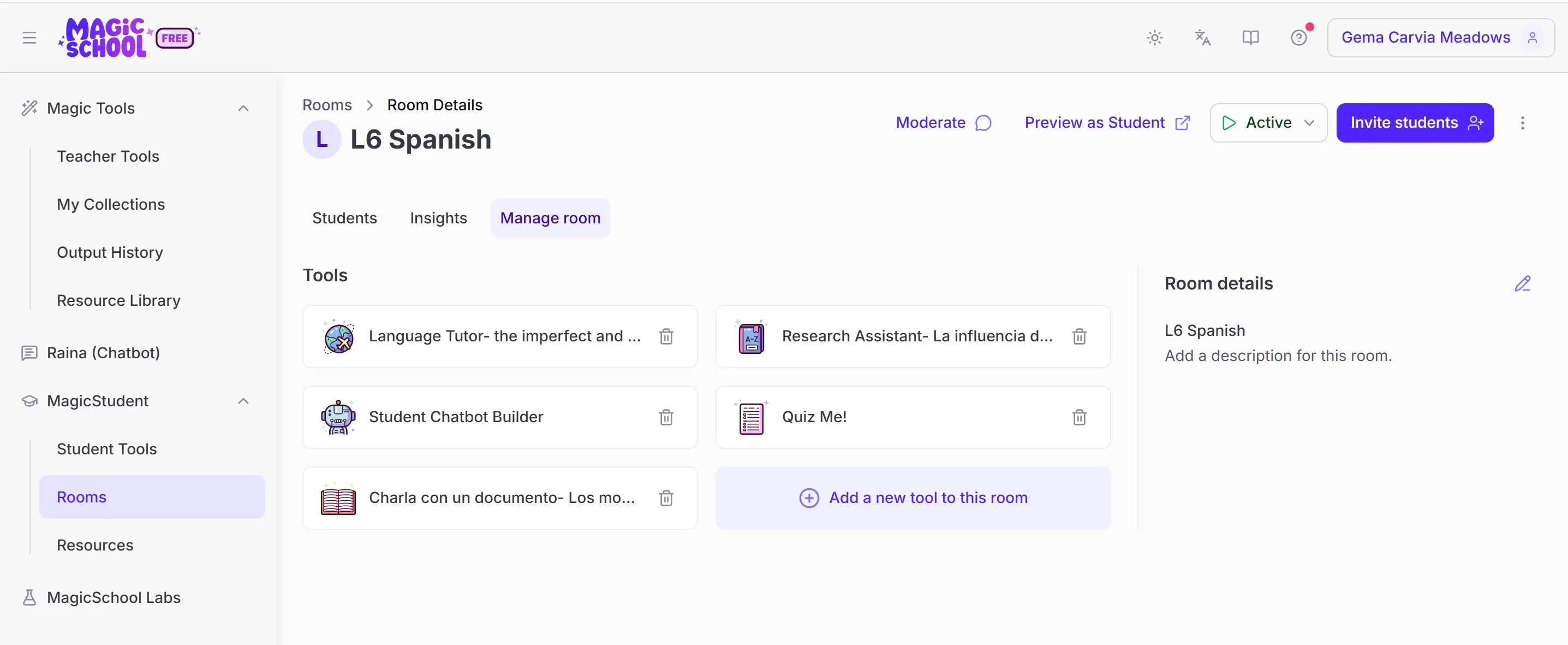
Under the guidance of Mrs Gema Carvia-Meadows, Head of Spanish, pupils have explored the responsible and imaginative use of artificial intelligence through carefully structured activities in Magic School rooms. These guided digital environments are designed to promote independence without replacing human insight, ensuring that curiosity, judgement and critical thinking remain central to the learning process.
In the Lower Sixth, pupils used Chat with Documents to engage in sophisticated group discussions with a customised AI tile based on a Spanish text examining the influence of models in the Hispanic world. Pupils explored how some models promote positive social attitudes, while critically analysing initiatives such as La Pasarela Cibeles, which introduced regulations requiring models to meet a minimum body mass index before walking the catwalk. Language learning became a vehicle for ethical debate, cultural literacy and nuanced expression.
In Middle Fifth, pupils focused on the topic of school, using their Magic School room to refine grammatical accuracy and strengthen their understanding of tenses. Conversations with Raina, a customised chatbot, allowed pupils to practise reflexive verbs in meaningful, personalised exchanges about their daily routines. Lower Fifth pupils, meanwhile, explored future careers, using the immediate future tense to articulate aspirations and ambitions. Tools such as Quiz Me provided opportunities for retrieval practice and self-assessment, reinforcing confidence alongside accuracy.
Beyond the Spanish classroom, digital learning extended into sustainability and global citizenship through an immersive Minecraft Education project with L4 and U4 pupils. Framed by the guiding questions, “What is a green job?” and “How can we make a greener city?”, pupils worked collaboratively to reimagine London as a more sustainable, environmentally responsible place to live.
Each pupil adopted a real-world role - architect, designer, gardener or project manager - mirroring professional collaboration and shared accountability. Using a bespoke Minecraft London World, they transformed ideas into tangible designs, submitting weekly progress reports and reflections through Archademy and documenting their journey in their Book and Quill.
Reflecting on the project, Mrs Carvia-Meadows commented:
“It has been fascinating to watch the girls become not only more environmentally aware but also more confident, collaborative and creative. This project truly brings learning to life.”
 Across all strands of learning, pupils have developed leadership, teamwork, creativity and critical thinking, while deepening their linguistic and environmental understanding. These experiences demonstrate how technology, when embedded thoughtfully within a clear pedagogical framework, can amplify learning rather than distract from it, empowering pupils to think independently, collaborate purposefully and engage confidently with complex global challenges.
As pupils continue to use these tools beyond the classroom, we look forward to seeing how their language skills, ideas and ambition continue to grow, and to the final Minecraft presentations, which promise to reflect the same originality and insight that have characterised this term’s learning.
Skills Developed:
✔ Leadership and organisation
✔ Teamwork and collaboration
✔ Creative and critical thinking
✔ Environmental awareness and sustainability
Where Next?